
HOME BATTERY STORAGE GUIDE

Straightforward answers about battery storage for your home


Home battery storage can help you use more of your available solar generation, store electricity during selected tariff periods, and gain greater control over how your home uses energy.

This guide explains battery capacity, inverter power, solar compatibility, smart tariffs, backup options, installation and the questions to consider before choosing a system.
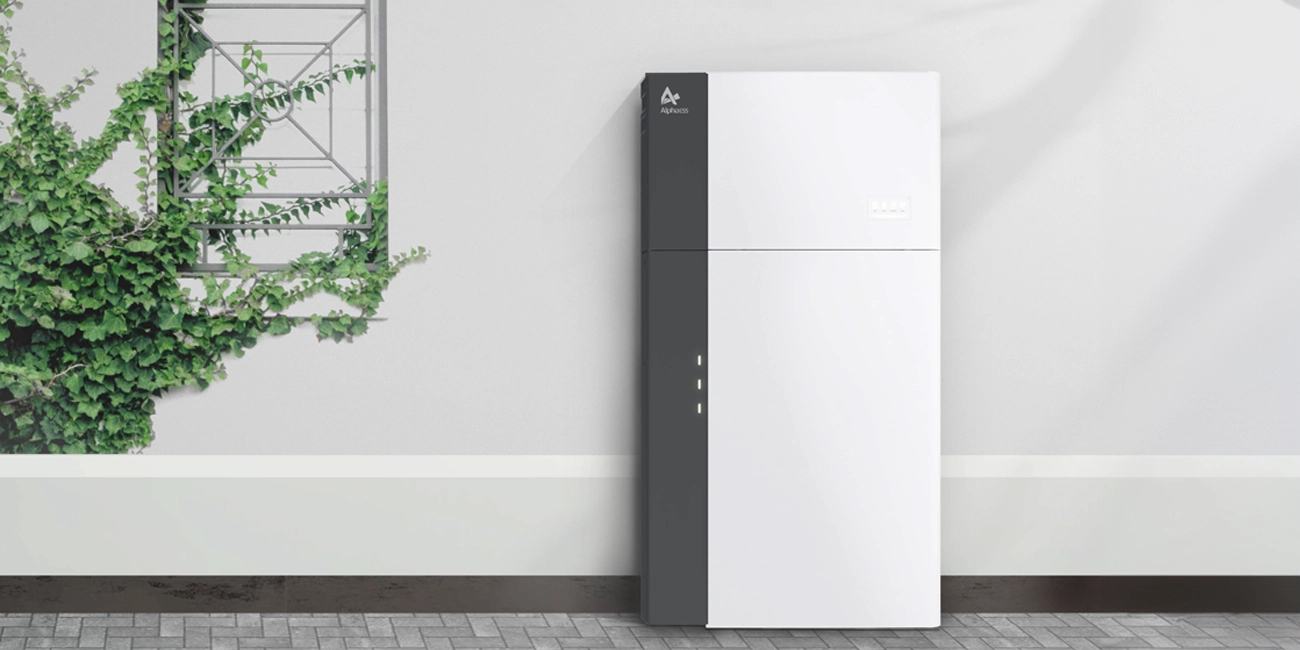
Image of AlphaESS G3 battery storage system

What will you learn from this guide?

  • How home battery storage works

  • Installing a battery with or without solar

  • Battery capacity and inverter power

  • Choosing the right system size

  • Smart tariffs and energy integrations

  • Backup during a power cut

  • Safety, installation and maintenance

  • Common home battery questions

  • Battery storage terminology

HOW DOES HOME BATTERY STORAGE WORK

What is a home battery storage system?

A home battery stores electricity for later use. It can store available electricity generated by solar panels or charge from the grid during selected periods. The stored energy can then be used around household demand, tariff strategy and configured system priorities. Combined with optional backup, this allows a compatible system to support agreed household circuits or priority loads during a grid interruption. Backup is not automatically included with every battery system.

A professionally designed system normally brings together:
Battery storage

Stores electricity for later use. Available capacity depends on the battery model, number of compatible modules and approved system configuration.
Inverter

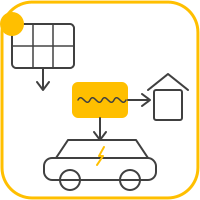
Manages the conversion and movement of electricity between compatible solar panels, battery storage, household demand and the grid.
Energy management

Controls charging and discharging according to the installed equipment, configured operating strategy, available integrations and optional backup.
Monitoring

Provides visibility of compatible solar generation, battery status, household consumption and grid exchange through the available monitoring platform or app.

AlphaESS UK BESS home installation
DIFFERENT INSTALLATION ROUTES

Can battery storage work with my property?

The appropriate installation route depends on the property, electrical supply, existing equipment and what you want the system to achieve.

Battery storage with new solar panels

Solar panels and battery storage can be designed together as one home energy system. Available solar generation can supply household demand, charge the battery or be exported according to the configured operating strategy.

Adding storage to existing solar

Battery storage can often be added to an existing solar installation, but the installer must first assess the existing inverter, solar array, metering, electrical arrangement and network requirements.

The installer will determine whether the existing equipment can be retained, adapted or incorporated through a compatible system design.

Battery storage without solar

You can install a home battery without solar panels. It can charge from the grid during selected periods and provide stored electricity later.

The potential value depends on electricity consumption, tariff rates, charging opportunities, system losses and how often you use the stored energy.

REASONS TO CONSIDER HOME BATTERY STORAGE

What can home battery storage do for you?

  • Make more use of solar generation

    Store available solar electricity that might otherwise be exported and use it later when household demand is higher.

  • Shift electricity use

    Charge a compatible battery during selected tariff periods and use stored energy at other times.

  • Understand household energy

    Use compatible monitoring to view solar generation, battery status, household consumption and grid exchange.

  • Support changing energy needs

    Design the system around current electricity consumption and consider future requirements such as an electric vehicle, heat pump or higher household demand.

  • Explore backup options

    Add compatible backup equipment designed around selected circuits and priority loads where the property and system configuration allow it.

SYSTEM SIZING EXPLAINED

Battery capacity and inverter power perform different roles

Battery capacity, measured in kilowatt-hours, tells you how much energy the battery can store. Inverter output, measured in kilowatts, helps determine how much electrical power the system can supply to your home at one time. A larger battery can provide more stored energy, but it does not automatically increase the power available at any given moment.

If household demand exceeds the inverter and battery system's output, you may still draw additional electricity from the grid. This can happen when several high-demand appliances operate simultaneously.

Complete system design

Brings capacity, power, solar generation, property supply, tariffs and future requirements together.

Inverter power

Affects how much electricity the system can supply at one time.

Battery capacity

Determines how much energy can be stored for later use.

Household demand

Includes the combined power required by appliances operating at the same time.

An authorised installer should assess both energy capacity and power demand before recommending a system.

AlphaESS UK BESS home installation
CHOOSING THE RIGHT CAPACITY

How much battery capacity do I need?

There is no single capacity that suits every household. A larger battery is not automatically better. Oversizing can increase cost without delivering proportional value if you rarely charge or use the extra capacity.

  • Daily and half-hourly electricity consumption
  • When electricity is used
  • Available solar generation
  • Seasonal differences in consumption and generation
  • Current and planned electricity tariffs
  • High-demand appliances
  • Electric vehicle charging
  • Heat pump use
  • Backup priorities
  • Available installation space
  • Inverter compatibility
  • Future energy plans
  • Available budget

An authorised installer should review your consumption data and explain why the proposed capacity and inverter combination suits your home.

SMART TARIFFS AND ENERGY INTEGRATIONS

Can a battery work with a smart electricity tariff?

Compatible home battery systems can support time-based charging and selected tariff integrations. This may allow the battery to charge during chosen periods and use the stored electricity later.

The functions available depend on the installed inverter and battery, electricity tariff, smart meter, internet connection, communications equipment, energy integration partner, configured operating mode and customer eligibility.

Some eligible households may also be able to participate in flexibility services that reward them for supporting the wider electricity network. Savings or rewards cannot be guaranteed, so always check system compatibility, eligibility, tariff terms and partner requirements.

BACKUP POWER

Will a home battery power my property during a power cut?

Not every battery installation provides backup power. Backup requires compatible equipment and an electrical arrangement designed around the household circuits or priority loads that must remain powered.

An installer will assess which circuits or appliances need backup, the power demand of those loads, inverter output, available battery capacity, battery state of charge and the expected backup duration. The installer must also consider starting demand from connected equipment and any required electrical changes.

A battery should not be described as providing unlimited backup or automatically powering the complete property. Available power and backup duration will depend on the selected equipment, stored energy and connected loads.

SAFETY, INSTALLATION & SUPPORT

Safe battery storage starts with the complete system

Home battery systems use monitoring and protection controls designed around the applicable battery, inverter and system configuration.

Safe operation also depends on correct product selection, compatible equipment, suitable positioning, appropriate mounting and clearances, temperature and environmental conditions, electrical protection, cable routes, professional installation and correct commissioning.

An IP rating does not make every indoor or outdoor location suitable. Always use an appropriately qualified installer and ensure safety features, certifications, and technical claims match the exact products being installed.

Supported beyond installation

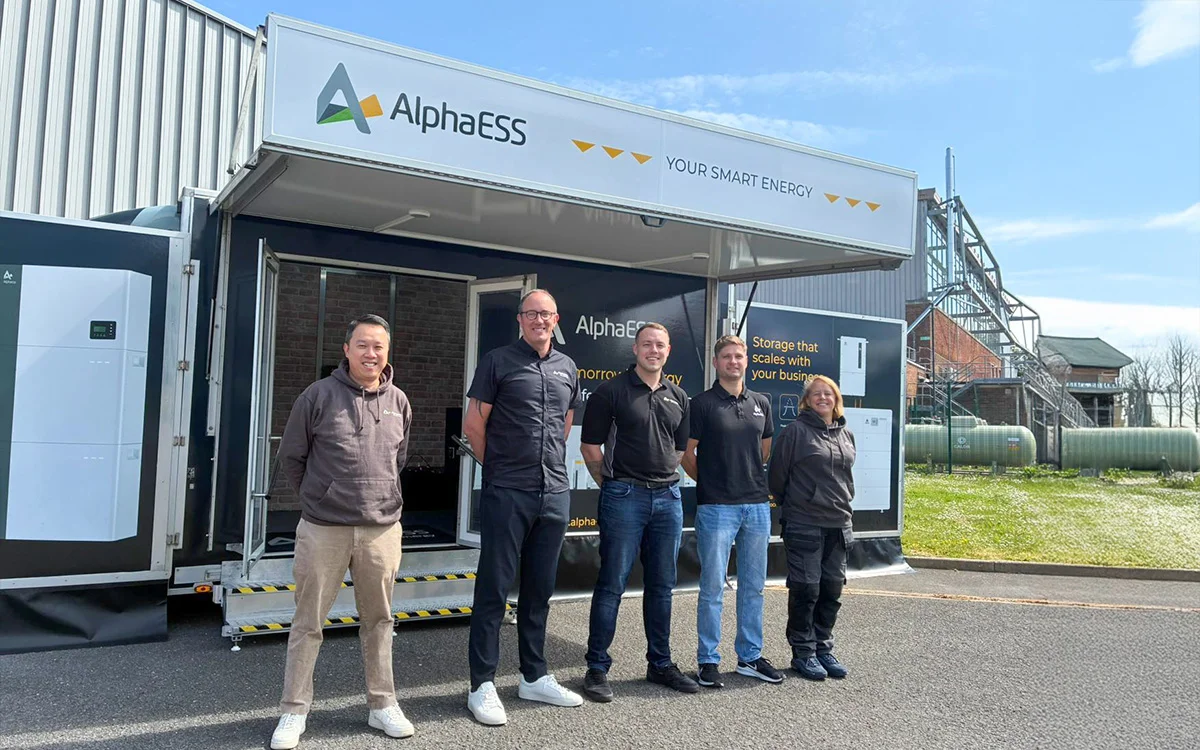
AlphaESS UK supports its authorised installer network with product training, technical guidance, commissioning assistance, documentation and ongoing support. This helps installers provide homeowners with professional system design, informed installation and dependable aftercare.

WHY CHOOSE ALPHAESS UK?

Connected home energy, supported in the UK

AlphaESS develops energy storage systems for homes, businesses and large-scale energy applications.

For homeowners, SMILE-G3 brings compatible solar generation, modular battery storage, intelligent monitoring, tariff-led charging and optional backup together within one connected AlphaESS home energy system.

With a choice of inverter and battery configurations, an authorised installer can design the system around your household energy use, property and future plans.

AlphaESS UK supports its installer network before, during and after installation, helping homeowners access product knowledge, technical guidance and clear support routes throughout the system lifecycle.
AlphaESS UK team
BATTERY STORAGE FAQs

Frequently asked questions

Choosing a home battery involves understanding capacity, inverter power, tariffs, backup and installation. These FAQs provide straightforward answers to common homeowner questions. Consult an AlphaESS Authorised Installer, as they will design a system tailored to your specific needs.

Do I need solar panels to install a home battery?

No. You can install a home battery with or without solar panels. Without solar, it can charge from the grid during selected periods. With solar, it can also store available solar generation for use later. The appropriate design depends on the property, tariff, electricity consumption and what you want the system to achieve.

Can battery storage be added to an existing solar system?

In many cases, yes. The existing solar array, inverter, electrical arrangement, metering and network requirements must be assessed before we can confirm a compatible installation route.

What is the difference between rated and usable capacity?

Rated energy describes the stated total energy capacity of the battery. Usable capacity is the portion available within the product's operating limits and specified test conditions. Always compare figures from the applicable product datasheet.

Can I add more battery capacity later?

Some compatible modular systems can support future expansion. This depends on the inverter, battery model, the age and condition of existing modules, permitted configuration and current manufacturer requirements. An authorised installer should always assess and complete any expansion.

Does a larger battery always reduce electricity bills by more?

No. The value of additional capacity depends on electricity consumption, solar generation, tariff rates, charging opportunities and how often you use the stored energy. Correct sizing matters more than simply choosing the largest battery.

Can a battery run high-demand appliances?

This depends on inverter power, battery capability, system configuration and the combined demand from appliances operating at the same time. Battery capacity alone does not determine whether the system can supply a high-demand appliance.

Can a battery charge an electric vehicle?

A home energy system may be able to supply electricity for EV charging, but you must consider compatibility, charging power, battery capacity and overall household demand. EV charging can represent a substantial electrical load, so it should be included in the complete system assessment.

Can a battery work with a heat pump?

Yes, battery storage can form part of a home that uses a heat pump, but heat pump demand varies considerably with property efficiency, weather and operating conditions. The installer should consider the heat pump's consumption and power requirements when sizing the inverter and battery.

Can batteries be installed outdoors?

Some battery models carry environmental protection ratings suitable for approved outdoor arrangements, but this does not make every outdoor location appropriate. Temperature, exposure, mounting, protection, clearances and cable routes must be assessed for the specific product and location.

How long does a home battery last?

Battery life depends on the product, operating conditions, temperature, charging behaviour, system settings and usage. Warranty periods, cycle conditions and retained-capacity terms vary by model. Check the applicable warranty document rather than assuming that one figure applies to every product.

Does a home battery require maintenance?

Maintenance requirements depend on the installed products and manufacturer guidance. Homeowners should keep the installation area clear, check for visible damage or warnings and contact their installer or the appropriate support route if they notice anything unusual. Homeowners should not open electrical enclosures.

How do I monitor the system?

Homeowners with compatible AlphaESS systems can use the AlphaESS App to view available solar generation, battery status, household consumption, grid exchange and system information. Available data, controls and settings depend on the installed equipment, connectivity, configuration and account permissions.

Do I need planning permission?

Requirements depend on the property, installation position, building status and local planning rules. Listed buildings, conservation areas and unusual installation arrangements may require additional checks. Your installer should identify the applicable electrical, network, building and planning requirements before work begins.

Who should install the system?

Battery storage should be designed, installed and commissioned by an appropriately qualified professional familiar with the selected equipment. An authorised AlphaESS installer can assess the property, recommend compatible equipment and explain the installation, monitoring and support arrangements.


Renewable Energy Jargon Buster

AC (Alternating Current)

Alternating current, the form of electricity used by most household appliances.

DC (Direct Current)

Electrical current that flows in one direction. Solar panels generate DC electricity, which must be converted to AC for home use.

Smart Export Guarantee (SEG)

The SEG mandates that licensed electricity suppliers offer a tariff and pay residential and small-scale low-carbon generators for electricity exported to the National Grid.

Battery Management System (BMS)

A system that monitors and manages the charging and discharging of the battery to ensure it operates safely and efficiently.

Depth of Discharge (DoD)

The proportion of a battery's rated capacity used during a discharge cycle. A battery with a 95% DoD can use 95% of its stored energy.

Energy Management System (EMS)

A system that optimises the use of energy stored in the battery by managing when to charge and discharge based on consumption patterns and grid conditions.

Grid

The network that delivers electricity from producers to consumers. When you use electricity from your utility company, you use grid power.

Hybrid Inverter

An inverter designed to coordinate compatible solar generation, battery storage, household demand and grid exchange.

IP Rating

A classification describing an enclosure's protection against solid objects and water under defined test conditions. It does not confirm that every installation location is suitable.

Kilowatt

A measure of electrical power. It helps describe how much electricity a system or appliance can supply or demand at one time.

kWh (Kilowatt-hour)

A measure of energy used or stored over time. Battery capacity and household electricity consumption are commonly measured in kilowatt-hours.

LFP (Lithium Iron Phosphate)

Lithium iron phosphate, a type of lithium-ion battery chemistry currently used in AlphaESS battery modules.

Off-Peak Hours

These are times when electricity demand and prices are low. Usually overnight.

MPPT

Maximum Power Point Tracking, technology used by an inverter to manage energy from connected solar-panel strings.

Self-Consumption

Using electricity generated by your own solar panels rather than exporting it or drawing the same amount from the grid later.

Smart Tariff

An electricity tariff where prices or charging periods may vary according to time or other defined conditions.

Virtual Power Plant (VPP)

A service that coordinates eligible distributed energy systems, such as compatible home batteries, to respond collectively to electricity-network requirements.

Modular Battery Design

This design allows batteries to be added or removed easily to increase or decrease storage capacity.

Backup Power

Power provided by a battery system during a grid outage to keep essential appliances and systems running.

Cycle Life

The number of complete charge and discharge cycles a battery can undergo before its capacity falls below a certain percentage of its original capacity.

Example Usage:

  • AC:

    The lights and appliances in your home run on AC power.

  • BMS:

    The BMS ensures your battery doesn't overcharge or deplete too much.

  • DoD:

    A battery with a 95% DoD can use 95% of its stored energy before needing a recharge.

  • kWh:

    Your electricity bill shows how much kWh you use monthly.

Ready to explore battery storage for your home?

An authorised AlphaESS installer can assess your electricity consumption, property supply, solar generation, tariff, power requirements, backup priorities and future plans. They can then recommend a compatible inverter and battery configuration designed around your household.
