Commercial Battery Storage Systems for UK Businesses

AlphaESS commercial battery storage systems help UK businesses manage peak demand and store more of their on-site solar and renewable generation. From a single 30 kW cabinet to parallel systems storing over 1 MWh, each is designed around the site’s energy profile, with dedicated UK technical support.

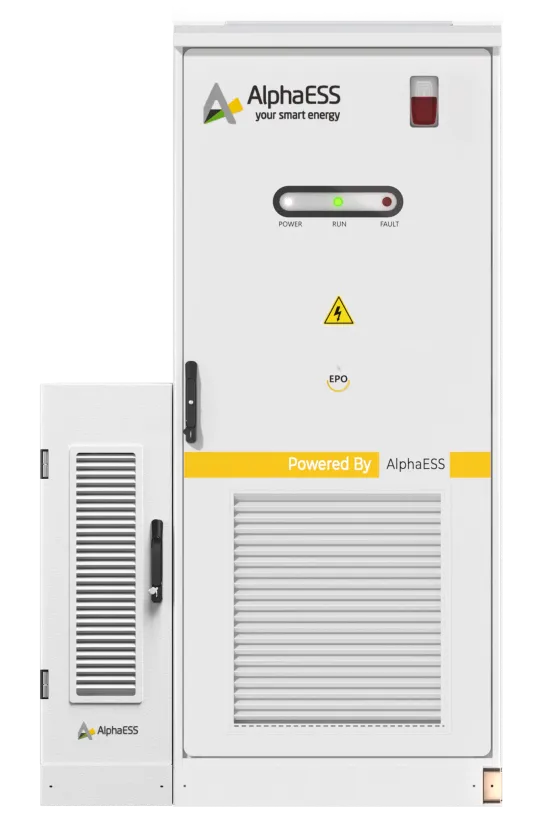
AlphaESS commercial battery storage range
COMMERCIAL AND INDUSTRIAL

Energy storage engineered for demanding operations

Commercial and industrial sites face changing electricity prices, demand peaks, grid constraints and growing electrification requirements.

A commercial or industrial battery energy storage system (BESS) can help organisations manage site demand, make greater use of on-site generation, respond to selected tariff periods and support defined resilience priorities. The right outcome depends on detailed energy data, system design, grid requirements and a clear commercial strategy.

Precision design and build around your energy strategy
Effective commercial battery storage begins with understanding how, when and why a site uses energy. AlphaESS UK and its commercial project partners assess load data, generation, tariffs, grid constraints, operational priorities and future requirements before developing a suitable system strategy.

Manage peak demand and peak shaving

Charge and discharge stored energy around defined periods of high site demand. Potential savings depend on the site profile, electricity contract, applicable charges and configured operating strategy.
Make greater use of on-site generation

Store compatible solar or other on-site renewable generation for use when site demand is higher or generation falls.

Predictable operational costs

Schedule charging and discharging around compatible time-of-use or dynamic energy arrangements, subject to the selected system, tariff and integration.

Getting more from a commercial battery

Compatible AlphaESS commercial systems can work with optimisation and flexibility partners. Capture uses AI to schedule charging and discharging around site demand, solar generation and prices, and can open access to flexibility markets. Gridimp adds microgrid control and energy trading. For storage at grid scale, see utility-scale battery storage.

AlphaESS StaX M29.9/50

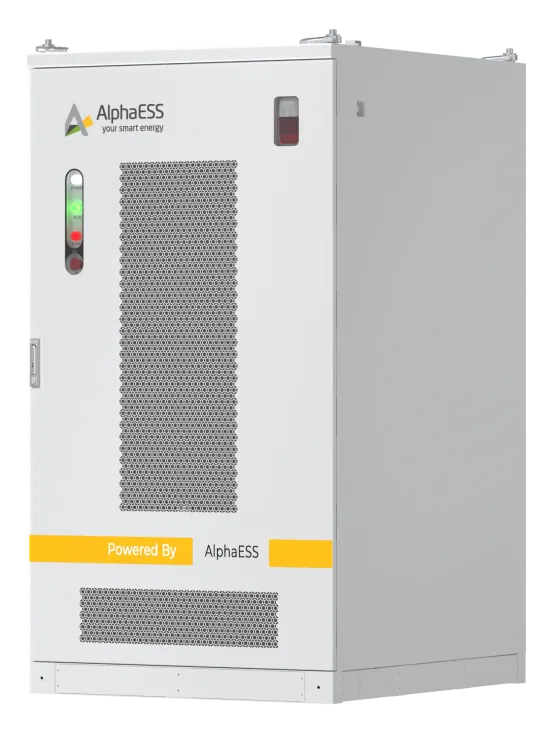
AlphaESS StaX M29.9/50

Built for sites where space matters and speed counts. The StaX series combines modular architecture with intelligent battery management, allowing rapid deployment without complex installation overhead. Expand capacity on your timeline, not the grid's.
AlphaESS STORION-H30/H50

AlphaESS STORION-H30/H50

STORION-H30/H50 G3 combines batteries, power conversion, solar connection, energy management and switching within a compact outdoor cabinet.
AlphaESS STORION-LC-TB125

AlphaESS STORION-LC-TB125

The STORION-LC-TB125 is a cutting-edge 125 kW/261 kWh all-in-one liquid-cooled energy storage system designed for commercial and industrial applications.

    Choosing a commercial battery storage system

    SystemPowerBattery capacitySuited to
    StaX M29.9/M5029.9 kW or 50 kW72.3 to 216.9 kWh, modularSites that need to start small and expand; IP66 for outdoor locations
    STORION-G3-H30/H5030 kW or 50 kW72.3 kWh (H30) or 120.5 kWh (H50), with DC extension cabinetsFarms, hospitality and SMEs adding storage to new or existing solar
    STORION-LC-TB125125 kW per cabinet261.2 kWh per cabinet, with parallel and extension optionsLarger sites with high demand or several generation sources

    Not sure which system fits? Half-hourly electricity data and details of your generation and grid connection are enough for an initial assessment. Discuss your commercial project.
    Commercial battery storage in practice

    See how UK businesses are using AlphaESS commercial battery storage systems to make more of the electricity they generate on site.

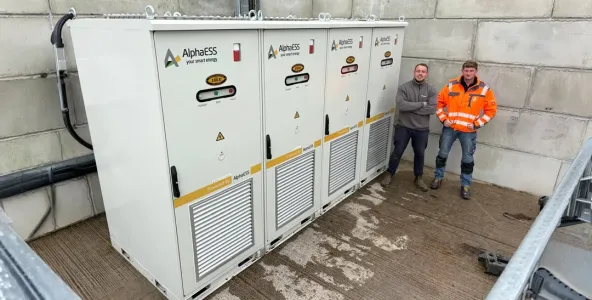
    AlphaESS STORION-TB125 battery storage installation at Taylor’s Farm Shop
    Hospitality and agriculture

    Taylor’s Farm Shop

    Two parallel STORION-TB125 systems and two DC extension cabinets give 250 kW of power and a reported 1,044 kWh of storage, capturing surplus electricity from solar, steam and Organic Rankine Cycle generation for use later in the day.

    Budle Bay Campsite, where AlphaESS storage was added to existing solar
    Hospitality

    Budle Bay Campsite

    A STORION-G3-H50 with a DC extension cabinet adds 241 kWh of storage to the campsite’s existing 65 kWp solar installation, so more of its own solar electricity can be used when the sun isn’t shining.

    “By combining AlphaESS STORION-TB125 systems in parallel, we helped Taylor’s Farm Shop capture surplus electricity from several on-site generation sources and store it for later use, making more of the energy produced on site.”

    Immersa, energy storage partner
    FAQs
    What is a commercial battery storage system and how does it work?

    A commercial battery energy storage system stores electricity for use according to the site’s operating strategy. It can charge from compatible on-site generation or from the grid during selected periods, then discharge when demand, electricity prices or operational requirements make stored energy more valuable.

    The available functions depend on the battery system, metering, controls, grid connection and energy contract.

    How can battery storage help reduce business energy costs?

    Battery storage can help a business make greater use of lower-cost electricity, reduce grid imports during selected peak periods and use more on-site renewable generation.

    It may also help manage demand peaks and applicable capacity-related charges. Actual savings depend on the site’s consumption, generation, electricity contract, operating strategy, project costs and system performance.

    Does a commercial battery system require solar panels?

    No. A suitable commercial battery can charge from the grid and operate without solar panels. It can also be integrated with compatible new or existing solar PV, wind generation or other on-site energy assets.

    The approved configuration depends on the selected equipment, existing infrastructure, metering and grid connection.

    What size battery storage system does my business need?

    The appropriate system depends on electricity consumption, peak demand, operating hours, on-site generation, grid capacity and the intended operating strategy.

    Future requirements such as electric vehicle charging, electrified heating, new equipment or site expansion should also be considered. Half-hourly energy data is normally required to assess suitable power and capacity.

    Can battery storage provide backup power during an outage?

    It can where compatible backup equipment and an approved switching arrangement are included in the system design.

    The supported loads, available power and backup duration depend on battery capacity, stored energy, equipment ratings and site priorities. Backup should be designed around clearly identified essential loads rather than assumed to support the whole site.

    Is commercial and industrial battery storage safe?

    AlphaESS commercial storage systems incorporate product-specific safety measures that can include lithium iron phosphate battery chemistry, battery monitoring, thermal management, alarms and automatic protection controls.

    Safe operation also depends on appropriate site selection, electrical design, fire strategy, access, installation, commissioning, monitoring and maintenance. The requirements must be assessed for the selected product and site.

    Can a commercial battery participate in flexibility services?

    Eligible systems may be able to participate in approved optimisation or flexibility services through a suitable integration partner. Eligibility depends on system capacity, metering, communications, site operation, electricity arrangements and the requirements of the selected service.

    What information is needed to assess a project?

    A useful initial assessment normally requires half-hourly electricity data, tariff information, details of existing or planned generation, grid connection information, site constraints and the organisation’s commercial and resilience objectives.