ENERGY INTEGRATION PARTNERS
Connect AlphaESS storage
to a smarter energy strategy
From monitoring to active optimisation
Choose the right integration
for your energy goals
Our integration partners support different residential and commercial energy strategies. Some connect home storage with compatible electricity tariffs, while others help businesses optimise battery operation around site demand, generation, market conditions and eligible flexibility services.
Compatibility and availability must be confirmed for the specific AlphaESS system and partner service.
Find the right energy integration
for your home or business
AlphaESS integration partners support different residential and commercial energy strategies. Home energy services can connect compatible battery systems with smart tariffs, automated optimisation and opportunities to earn rewards through grid flexibility.
Commercial platforms can manage storage around site demand, on-site generation, electricity prices and eligible energy markets. The right integration depends on your AlphaESS system, software, metering and communications. Your installer or project partner will confirm compatibility before connection.
01
Confirm the exact AlphaESS model and firmware.
02
Confirm the meter, communications and network requirements.
03
Confirm the tariff, platform or service is currently available.
04
Confirm who configures, operates and supports the connection.
05
Confirm data permissions, commercial terms and fallback behaviour.
Connect compatible home storage with smarter tariffs and services
Supported integrations can help compatible AlphaESS systems charge or discharge around selected tariff periods, configured household priorities or approved energy services.
Actual results depend on household electricity use, solar generation, battery capacity, tariff terms, system configuration and the integration available.

Optimise around real site data

Turn battery storage into an actively managed energy asset
Connect compatible AlphaESS commercial storage with approved optimisation platforms that can respond to site demand, on-site generation, electricity prices and defined operating objectives.
The right integration can help a business manage peak demand, increase the use of locally generated electricity, shift consumption between tariff periods and explore eligible flexibility services. Available functions depend on the AlphaESS system, metering, communications, partner platform and commercial agreement.
Integration needs technical and operational ownership
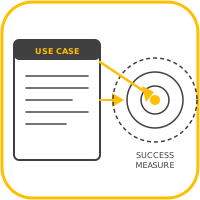
Define the use case and success measure
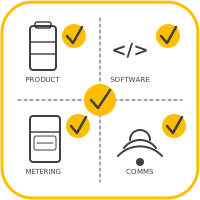
Confirm product, software, metering and communications compatibility.
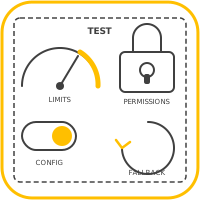
Test configuration, permissions, control limits and fallback behaviour.
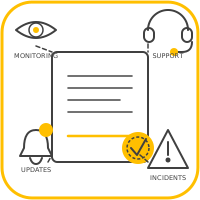
Agree monitoring, support, updates and incident ownership.
A compatible integration platform can use site data, generation forecasts, electricity prices and agreed operating priorities to help determine when the AlphaESS battery should charge, discharge or retain capacity.
Depending on the site and selected partner, this could support peak demand management, increased use of on-site generation, tariff optimisation or participation in eligible flexibility services. Results depend on the system design, operating conditions and commercial arrangements.
The assessment will usually require half-hourly electricity consumption data, tariff information, on-site generation data and details of the site’s grid connection. The project team will also need to understand the AlphaESS system, metering arrangement, communications infrastructure and the outcomes the business wants to achieve.
For an existing installation, the exact battery model, inverter, firmware and current control configuration should also be confirmed.
Potentially. Compatibility depends on the installed AlphaESS equipment, firmware, metering, communications, supported interface and the requirements of the integration partner.
The system should undergo a technical compatibility review before any connection or external control is enabled. Never assume compatibility based on the AlphaESS or partner brand alone.
Approved platforms may be able to optimise charging and discharging automatically within defined operating limits. The AlphaESS system’s protection functions, site restrictions and agreed control priorities continue to apply.
Before commissioning, the parties should agree who can change the operating strategy, how commands are prioritised and what happens if external control becomes unavailable.
Eligible AlphaESS systems may be able to participate through an approved integration or energy-services partner. Participation depends on factors including system capacity, location, metering, communications, grid connection and the rules of the relevant programme.
Availability and revenue are not guaranteed. The partner should explain the current service requirements, commercial terms and responsibilities before the business commits.
The battery should follow the approved fallback strategy established during commissioning. This may involve returning to a defined local operating mode until communications are restored.
Fallback behaviour, alarms, remote access and responsibility for resolving connection issues should be documented before the integration goes live.
Responsibility may be shared between the system installer, AlphaESS UK and the integration partner. The installer will usually remain responsible for the installed electrical system, while the integration provider supports its platform and associated service.
Each project should have a clearly documented support route covering commissioning, software changes, monitoring, faults and incident escalation.
Only supported interfaces, approved configurations and authorised control methods should be used. Unapproved equipment, settings or software access could affect system operation, technical support or warranty coverage.
Compatibility and warranty implications should be confirmed with AlphaESS UK and the integration provider before an external platform is connected.
A commercial assessment should use the site’s actual consumption, generation, tariff and operating data. It should also account for system losses, battery operating limits, degradation, integration charges and any service fees.
Forecasts should be presented as estimates based on stated assumptions, rather than guaranteed savings or revenue.
Timescales depend on the complexity of the site, availability of energy data, equipment compatibility, metering and communications requirements, partner onboarding and any contractual or network approvals.
A project-specific integration and commissioning plan should be agreed once the initial technical assessment is complete.
No. Compatibility depends on the AlphaESS product, inverter, battery, firmware, metering, communications and the requirements of the selected partner service. Tariff eligibility, location, account type and commercial terms may also apply. Compatibility should be confirmed before selecting a tariff, entering a service agreement or enabling external control.