The control centre of your
home energy system
SMILE-G3 hybrid inverters bring compatible solar generation, battery storage, household demand, grid exchange and energy services together within one intelligently managed system.

Choose the right inverter for your system
The appropriate inverter depends on more than headline power output. Your property supply, solar array, battery configuration, expected loads, network requirements and backup priorities must be assessed together.
An authorised AlphaESS installer will match the inverter and compatible equipment to the complete system design.
SMILE-G3-S3.6 and S5
Single-phase hybrid inverter options offering 3.68 kW or 5 kW nominal output. Designed for compatible AlphaESS home energy systems combining solar generation, modular battery storage, intelligent monitoring and an appropriately designed backup arrangement.
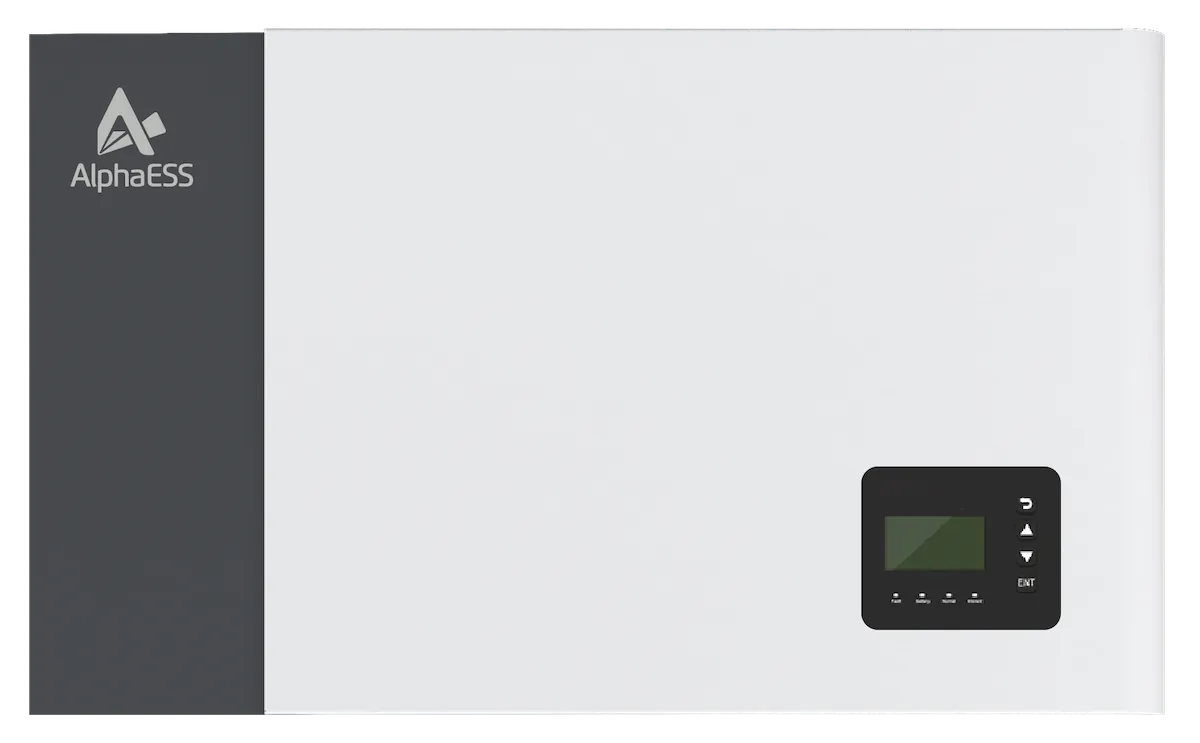
SMILE-G3-S8
An 8 kW single-phase hybrid inverter for homes with higher power requirements. An authorised AlphaESS installer will assess the electrical supply, solar array, battery capacity, network requirements and backup priorities before recommending the system configuration.
SMILE-G3-T10 and T20
Three-phase hybrid inverter options offering 10 kW or 20 kW nominal output. These models are intended for larger properties and projects with higher power requirements. Battery capacity, available output and backup design depend on the selected model and complete system configuration.
Hybrid Inverter
At the centre of a compatible SMILE-G3 system, the hybrid inverter coordinates solar generation, battery charging and discharging, household demand, grid exchange and configured backup functions.
The selected model determines the electrical phase, power output, solar input and compatible system equipment. Performance and backup capabilities vary by model and configuration, so an authorised AlphaESS installer will specify the inverter as part of the complete home energy system.

What the inverter manages
Support time-based charging and compatible tariff integrations, allowing energy to be stored and used at selected times.
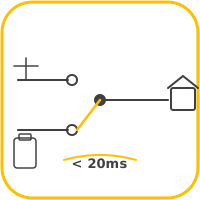
Work with compatible AlphaESS backup equipment to supply the approved household loads identified during system design.


Control, safety and installation
Connected Control
Once the system has been commissioned, homeowners can use the AlphaESS App to view generation, consumption, battery status and system energy flows. The information and controls available depend on the installed equipment, account permissions and configured operating modes.
AlphaCloud provides the connected monitoring platform behind supported AlphaESS systems, with professional functions available through the appropriate installer or support route.
Layered system protection


Choose the right foundation for your home energy system

Find an authorised installer